



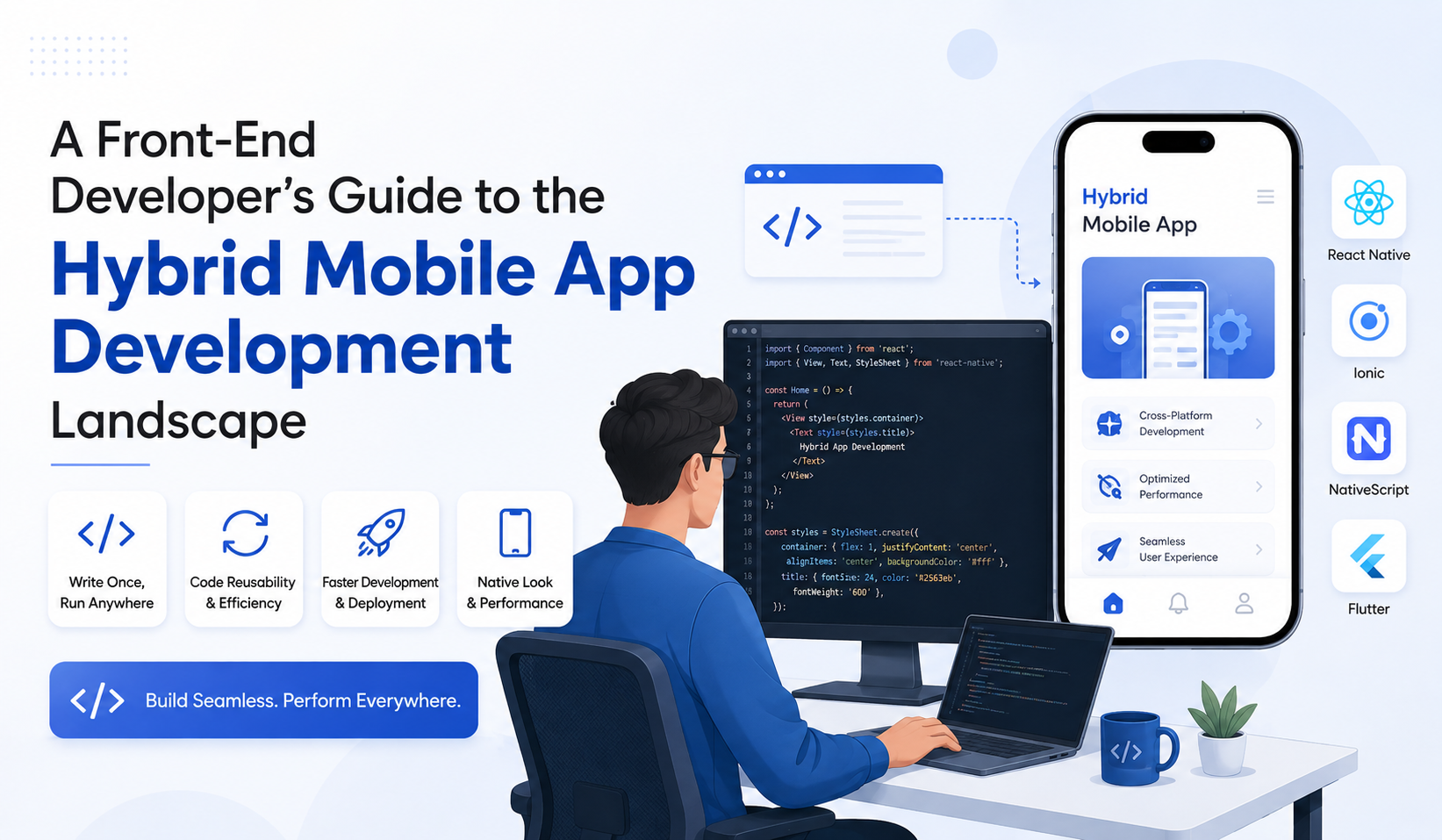
Introduction: Transitioning from Web to Mobile
For a front-end developer, mastering HTML, CSS, and JavaScript is just the beginning. As businesses increasingly demand mobile-first experiences, the expectation for front-end developers to bridge the gap between web applications and mobile apps has never been higher.
Historically, building a mobile application meant learning entirely new languages (Swift for iOS, Kotlin/Java for Android). Today, modern frameworks have completely transformed this landscape. By leveraging existing web development skills, front-end developers can now build high-performance mobile applications without starting from scratch. This shift has led to a massive surge in demand for strategic hybrid mobile app development.
The Mobile Development Landscape: By the Numbers
Understanding industry trends helps front-end developers choose the right tech stack for future-proofing their careers and projects:
|
74% Of top retail apps are built using cross-platform or hybrid frameworks |
1 Codebase Deploys to iOS, Android, and the Web simultaneously |
40% Reduction in development time compared to native builds |
Key Consideration 1: Understanding the Architectural Divide
|
01 Hybrid vs. Native Development The core debate in mobile tech is often between hybrid and native mobile app development. Native apps are built specifically for one platform, offering maximum performance and deep access to hardware (like the GPU or camera). However, they require two separate development teams and codebases. |
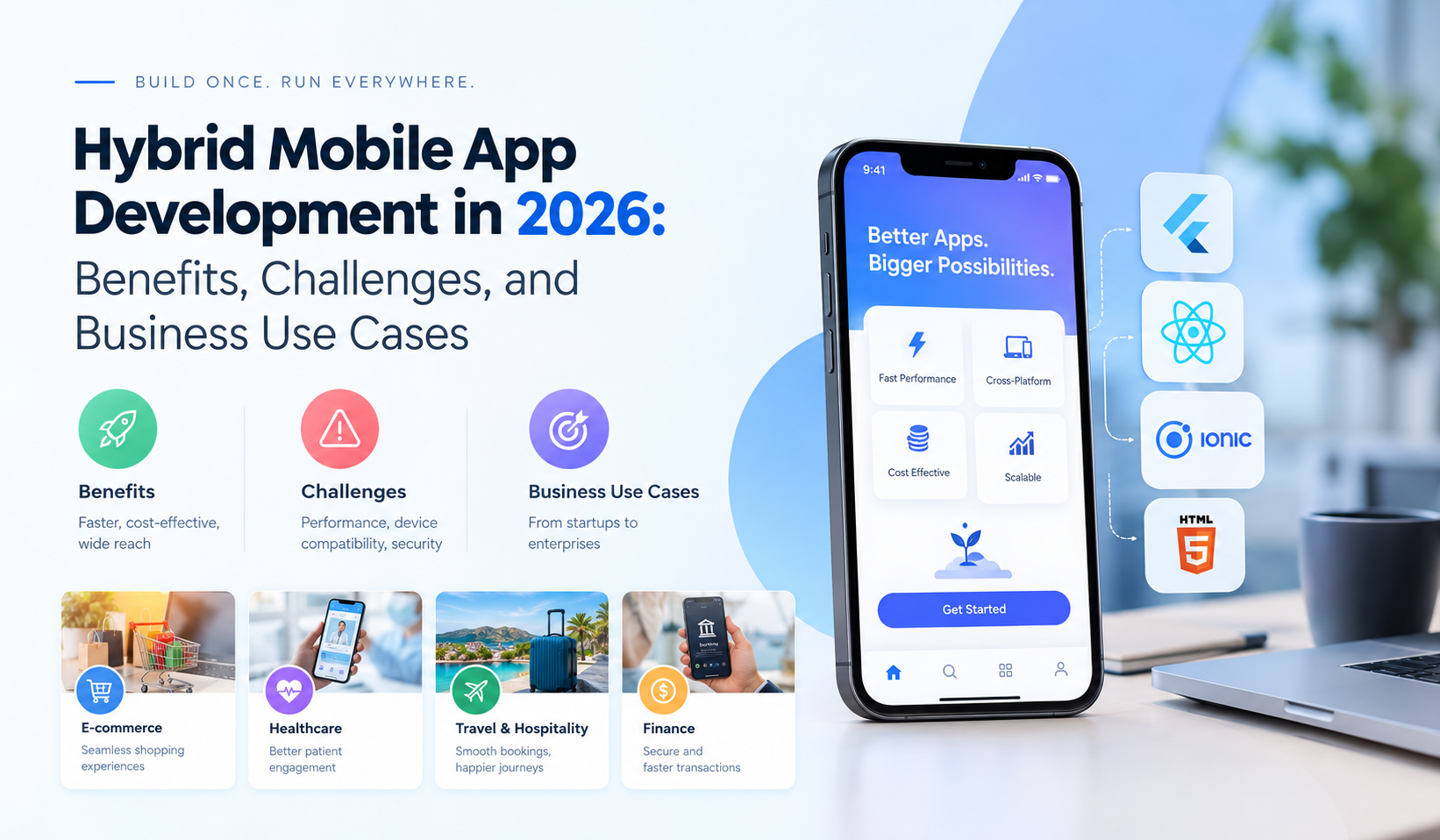
Hybrid development wraps web technologies (HTML, CSS, JS) inside a native shell using tools like Apache Cordova or Capacitor. This allows front-end developers to create apps that look and feel native while maintaining a single, unified codebase, dramatically reducing costs for businesses.
Key Consideration 2: The Evolution of Cross-Platform
|
02 The Sweet Spot for Modern Developers While traditional hybrid apps run in a web view, modern frameworks like React Native bridge the gap by rendering actual native components using JavaScript. For agencies providing top-tier cross platform app development services, these frameworks are the gold standard. They offer near-native performance while keeping the development lifecycle highly agile. |
If you are a React developer, moving to React Native is incredibly intuitive. The learning curve is minimized, allowing you to focus on mobile-specific UX patterns rather than learning a new programming language.
Key Consideration 3: Collaborating with Tech Hubs
|
03 Scaling with the Right Agency Partner As applications scale, internal teams often need external support to handle complex native integrations, UI/UX overhauls, or backend architecture. Partnering with a leading mobile app development company in Delhi or the NCR tech hub gives businesses access to a deep pool of skilled developers who are well-versed in both front-end ecosystems and advanced mobile deployments. |
Top Frameworks Every Front-End Developer Should Know
- React Native — Backed by Meta, this is the go-to framework for JavaScript developers wanting to build true cross-platform native apps.
- Ionic / Capacitor — Perfect for standard hybrid apps. It lets you use standard React, Vue, or Angular to build your app and deploy it anywhere.
- Flutter — Backed by Google and uses Dart. While it requires learning a new language, it offers incredible UI flexibility and performance.
Conclusion: The Future is Shared Code
For front-end developers, the hybrid and cross-platform landscape represents a massive opportunity to expand skill sets and deliver end-to-end digital products. By mastering these frameworks, developers can deliver high-quality applications faster and more cost-effectively than ever before.
|
Need Expert Mobile App Developers? Whether you are looking to augment your front-end team or outsource a complete application build, partnering with experts ensures your app is scalable, secure, and fast. Get in touch with our expert team to explore modern mobile development solutions for your business! |
Frequently Asked Questions
Q: What exactly is hybrid mobile app development?
A: Hybrid mobile app development involves building an application using standard web technologies (HTML, CSS, JavaScript) and wrapping it in a native container so it can be distributed on app stores and access basic device features.
Q: How does it differ from native mobile app development?
A: Native mobile app development requires writing code in platform-specific languages (Swift for iOS, Kotlin for Android) tailored for that specific operating system. Native apps typically offer slightly better performance for heavy gaming or AR, but take longer and cost more to build than hybrid apps.
Q: When should a business opt for cross platform app development services?
A: Businesses should utilize cross platform app development services when they want to launch on both iOS and Android simultaneously, have a limited budget for development and maintenance, or want to ensure UI consistency across all devices.
Q: Why is it beneficial to hire a mobile app development company in Delhi NCR?
A: Hiring a mobile app development company in Delhi provides businesses with access to a massive talent pool of experienced full-stack and front-end developers, offering world-class technical execution at highly competitive development rates.