



Introduction: The Smart Choice for Modern Mobility
As mobile usage continues to dominate the digital landscape in 2026, businesses face a critical technical decision: how to deploy high-quality applications across iOS and Android without doubling their engineering budgets. The answer lies in the massive advancements of modern framework technologies.
The gap in performance between hybrid and native apps has practically vanished. Today, hybrid mobile app development is the strategic standard for startups and enterprises alike. By utilizing a single codebase, companies can launch faster, iterate seamlessly, and provide a unified user experience. However, understanding when to leverage this technology—and its inherent challenges—is key to a successful digital product launch.
The 2026 Mobile Ecosystem: By the Numbers
Data illustrates why cross-platform and hybrid architectures are dominating the industry:
|
45% Reduction in development time by utilizing a shared codebase |
1 Codebase Deploys seamlessly across Apple App Store and Google Play |
70% Of new B2B enterprise apps in 2026 are built on hybrid frameworks |
Key Consideration 1: The Architectural Debate
|
01 Hybrid vs. Native Development The choice between hybrid and native mobile app development depends heavily on the use case. Native apps are written in platform-specific languages (Swift/Kotlin), offering maximum computing power for heavy 3D games or complex AR applications. However, for 90% of business applications—such as eCommerce, SaaS dashboards, and content portals—modern hybrid tools like React Native and Flutter provide native-like speeds at a fraction of the cost. |
By leveraging cross platform app development services, businesses ensure UI consistency across all devices while vastly simplifying post-launch maintenance.
Key Consideration 2: Finding the Right Engineering Partner
|
02 Leveraging Regional Tech Hubs Executing a flawless hybrid application requires developers who understand complex JavaScript/Dart frameworks and native device bridging. Partnering with a leading mobile app development company in Delhi offers businesses a distinct advantage. Delhi NCR's robust tech ecosystem provides access to highly skilled engineers who can navigate the nuances of cross-platform builds, ensuring your app passes strict App Store guidelines while remaining highly secure. |
Best Business Use Cases for Hybrid Apps in 2026
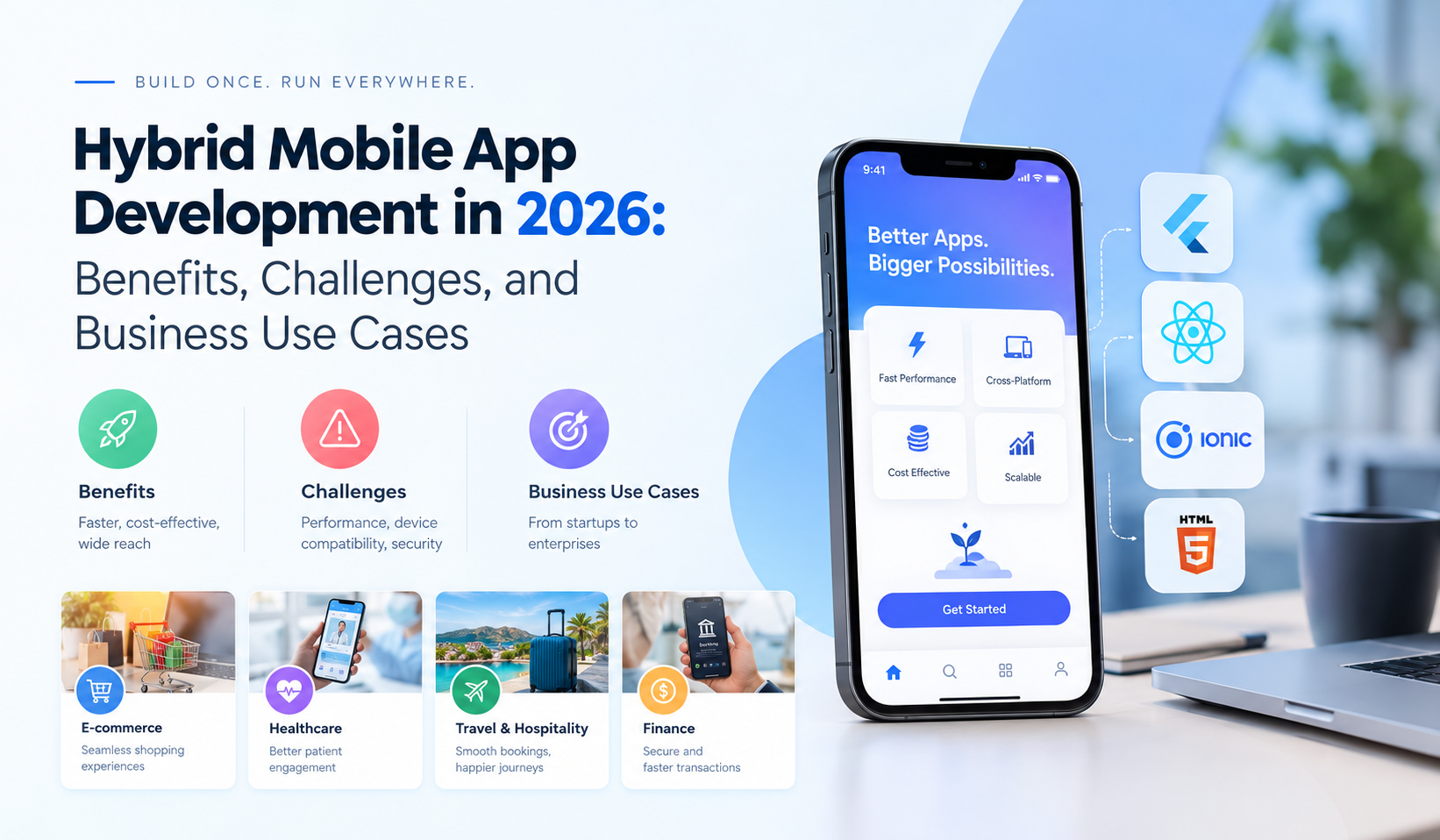
- eCommerce & Retail Apps — Delivering uniform shopping experiences, seamless cart syncing, and integrated payment gateways across all mobile devices.
- Enterprise & Internal HR Tools — Creating secure, cross-platform portals for employees to manage workflows, regardless of their personal device type (BYOD).
- Minimum Viable Products (MVPs) — Allowing startups to rapidly launch on both iOS and Android simultaneously to validate market demand quickly.
- Content & Media Platforms — Streaming apps and news aggregators that rely on clean UIs and simple data fetching rather than heavy device hardware.
Conclusion: Optimize Your Mobile Strategy
In 2026, efficiency is everything. Hybrid app development represents the perfect synergy of speed, cost-effectiveness, and high performance. While challenges like device hardware bridging exist, they are easily managed by experienced engineering teams. By adopting a cross-platform approach, you empower your business to dominate the mobile landscape rapidly and sustainably.
|
Ready to Launch Your Hybrid Application? Don't waste time and budget on separate native builds when a unified codebase can do it all. Our specialized developers deliver lightning-fast, secure hybrid apps. Contact us today to discuss your mobile strategy and get a comprehensive technical roadmap! |
Frequently Asked Questions
Q: What is the main advantage of hybrid mobile app development?
A: The biggest advantage of hybrid mobile app development is cost and time efficiency. By writing a single codebase, developers can deploy the app to both iOS and Android simultaneously, cutting development and maintenance costs nearly in half.
Q: When should a business choose native mobile app development over hybrid?
A: A business should choose native mobile app development if the application requires heavy processing power (like complex 3D gaming), intense graphics rendering, or deep, continuous access to low-level device hardware APIs.
Q: What do cross platform app development services include?
A: Professional cross platform app development services include UI/UX design, single-codebase programming (using React Native or Flutter), backend API integration, rigorous cross-device testing, and deployment to both the Apple App Store and Google Play Store.
Q: Why is hiring a mobile app development company in Delhi a smart choice?
A: Hiring a mobile app development company in Delhi connects you to an elite IT hub. You gain access to full-stack engineers experienced in modern cross-platform frameworks, offering rapid project turnaround, agile methodologies, and highly competitive development rates.