



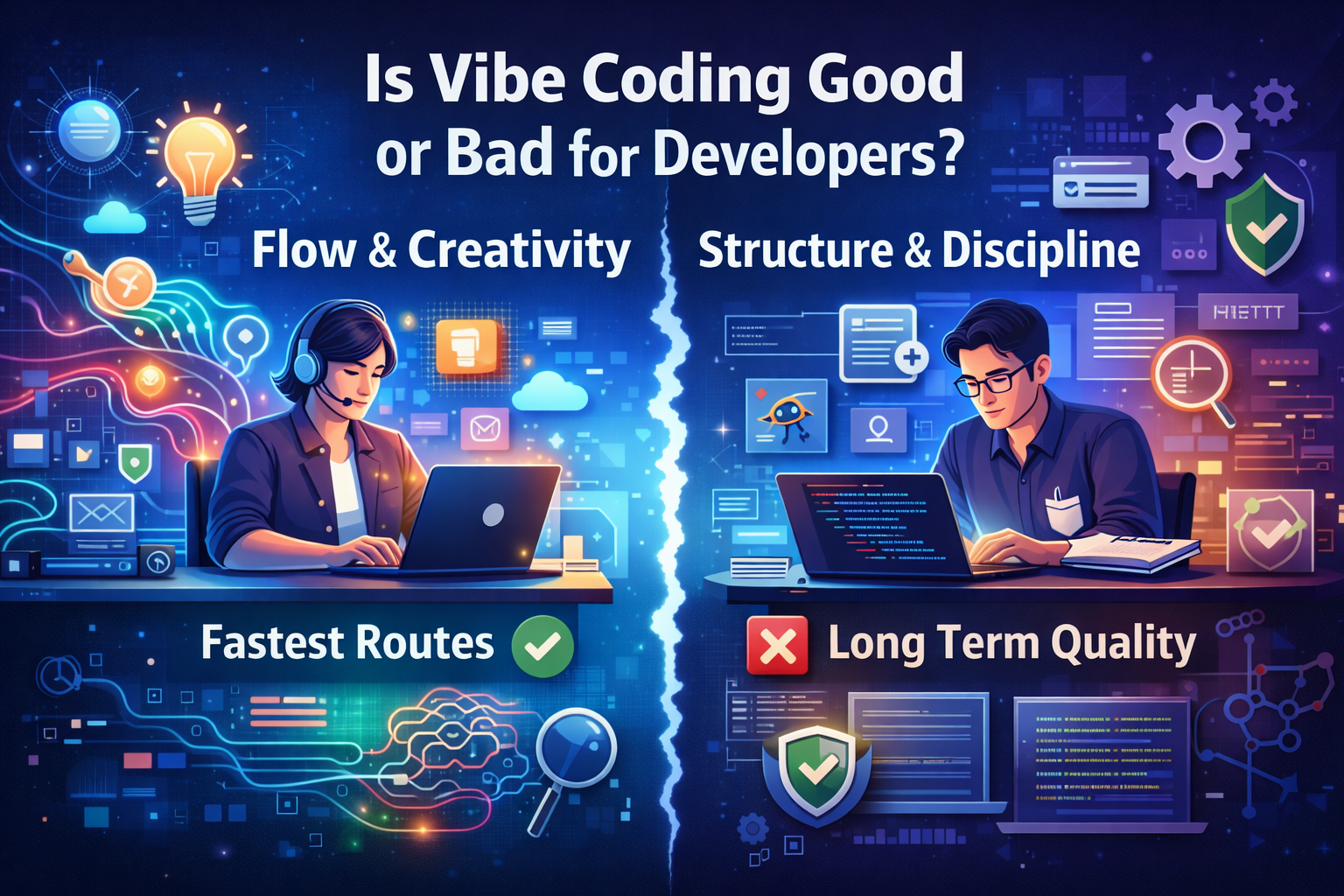
Is Vibe Coding Helpful or Does It Have a Bad Impact on Developers?
In recent years, a new term has quietly entered the developer ecosystem — “Vibe Coding.”
It refers to a relaxed, intuitive, and flow-driven approach to coding where developers rely more on instinct, creativity, and momentum rather than rigid structures or heavy documentation.
But the big question is:
👉 Is vibe coding good for developers, or does it negatively impact code quality and long-term growth?
Let’s break it down.
What Is Vibe Coding?
Vibe coding is a mindset where developers:
-
Code based on flow and intuition
-
Focus on getting things working fast
-
Avoid overthinking architecture initially
-
Rely on creativity rather than strict rules
It’s common among:
-
Startup developers
-
Indie hackers
-
Freelancers
-
Hackathon teams
Vibe coding often thrives in environments where speed and innovation matter more than perfection.
✅ How Vibe Coding Helps Developers
1. Boosts Productivity and Momentum
When developers are “in the zone,” productivity skyrockets. Vibe coding encourages:
-
Faster prototyping
-
Less mental friction
-
Continuous progress
This is especially useful in early-stage development or MVP creation.
2. Encourages Creativity & Innovation
Rigid coding practices can sometimes limit creativity. Vibe coding allows developers to:
-
Experiment freely
-
Try unconventional solutions
-
Discover smarter or simpler approaches
Some of the best ideas are born during unstructured coding sessions.
3. Reduces Burnout
Constant pressure to follow strict rules can drain developers. Vibe coding:
-
Feels more natural
-
Reduces stress
-
Makes coding enjoyable again
Happy developers write better code in the long run.
4. Great for Rapid Prototyping
For startups and agencies like Calcunext, vibe coding can help:
-
Validate ideas quickly
-
Build proof-of-concept solutions
-
Test user flows before full optimization
Speed matters when the market is competitive.
❌ The Downsides of Vibe Coding
1. Poor Code Structure Over Time
Without planning, vibe-coded projects may suffer from:
-
Spaghetti code
-
Inconsistent patterns
-
Difficult debugging
What feels smooth today may become a nightmare tomorrow.
2. Harder Team Collaboration
Vibe coding is often personal. In team environments, it can lead to:
-
Confusion among developers
-
Lack of shared standards
-
Increased onboarding time
Teams need consistency, not just creativity.
3. Technical Debt Accumulates Fast
Skipping architecture decisions can result in:
-
Performance issues
-
Security vulnerabilities
-
Costly refactoring later
Technical debt is one of the biggest risks of uncontrolled vibe coding.
4. Scalability Issues
What works for a small project may fail when:
-
User traffic increases
-
New features are added
-
Multiple developers join
Scalable systems require structured planning.
⚖️ The Right Balance: Vibe Coding + Discipline
The truth is — vibe coding isn’t bad, but unchecked vibe coding is risky.
Best approach:
✔ Use vibe coding during ideation and prototyping
✔ Switch to structured coding for production systems
✔ Apply best practices after creativity flows
✔ Document and refactor regularly
At Calcunext, we believe in:
“Code with creativity, but ship with discipline.”
When Should Developers Use Vibe Coding?
| Situation | Recommended |
|---|---|
| MVP development | ✅ Yes |
| Hackathons | ✅ Yes |
| Learning & experimentation | ✅ Yes |
| Large enterprise systems | ❌ No |
| Security-critical apps | ❌ No |
Final Thoughts
Vibe coding is not a replacement for good engineering — it’s a tool.
When used wisely, it can:
-
Improve productivity
-
Spark innovation
-
Make development enjoyable
But when abused, it can:
-
Hurt maintainability
-
Slow teams down
-
Increase long-term costs
The smartest developers know when to flow and when to structure.
💡 Want expert guidance on building scalable, clean, and future-ready software?
Calcunext helps businesses turn ideas into reliable digital solutions — balancing creativity with performance, security, and scalability.
👉 Contact us today to build smarter software.